Stars: 3 / 5
Recommendation: I cannot recommend this book to anyone without mentioning that I am biased about it. It opened very slow with a lot of drag, overtly descriptive and with too many footnotes deviating you from the main plot. Although it became interesting sometime middle Volume II, it’s ending did not justify the immense epic format the novel was created. I would say read at your own judgement.
Jonathan Strange & Mr. Norrell is a fantasy fictional debut novel by Susanne Clark, first published in September of 2004. The book is set in 19th century England around the time of Napoleonic Wars in an alternate world where magic and science co-existed. The plot centers on two men – Jonathan Strange and Gilbert Norrell.
Clark was awarded Hugo Award for Best Novel in 2005 for her work in this book. It also reached #3 in New York Times Best-seller List. The book was also adapted to a seven-part TV miniseries by Peter Harness in 2015 which aired on BBC One.
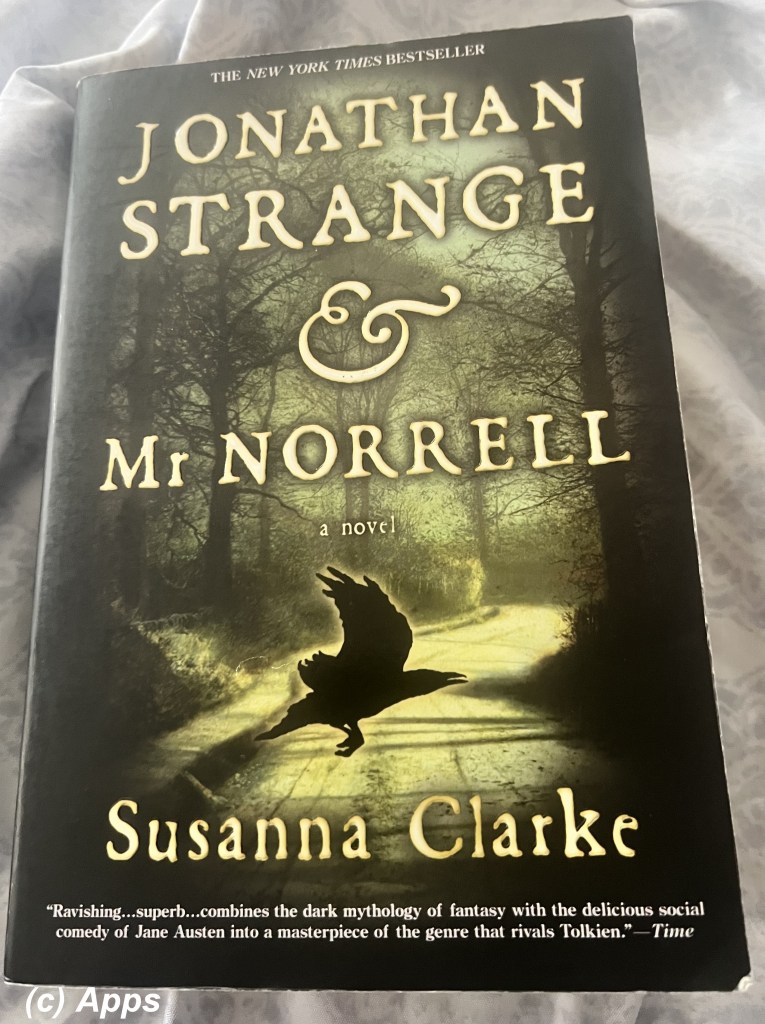
I had first picked this book a couple years ago, but after reading a few chapters I put it aside as I had felt that the whole writing was too descriptive, too drag and too many pages. However, I came across it recently in the bottom of my “To Read” pile in my library. Finally I thought its time to finish this book.
This books is divided into three volumes, making it a large book of approx. 900 pages. It could have been published into three books to make it easier for the reader. Just my opinion though. It is also written in a first person account, but I failed to understand who that first person was. Was it the author herself?
Volume I rests around Mr. Gilbert Norrell. Volume II focuses on Jonathan Strange with other characters from Volume I popping up now and then. Volume III focuses on John Uskglass, the Raven King. The tales starts in 1807 and goes till 1817 when this book ends spanning a total of 10 years.
The author did leave a lot of footnotes of several reference books, scenes and characters that would become prominent or connecting to the plot lines in the future pages. But they started becoming more and more annoying as the book progressed. Some of the footnotes seemed like actual plot lines that could have easily been added to the main plot. Clark used the English language spoken in UK and around in the 1800s in her plot something that reminds you of a Jane Austen novel
The title of the book somehow lead me to think this will be close to the 2006 American psychological thriller The Prestige that showcases the feud between two stage magicians in Victorian London – Robert Angier and Alfred Borden – over the perfect teleportation trick. Somehow I hoped it would be like that story. But my expectations were shattered after I read a few chapters, which was perhaps another reason why I had put it down the first time I picked it.
For someone who is supposed to be a strong magician, Mr. Norrell came across spineless and easily malleable. He gets easily influenced by Mr. Drawlight and Mr. Lascelles, even though he acknowledges that they have ulterior motives to be his well wishers. I didn’t understand that about Mr. Norrell at all. It irritated me that he would not and could not standup to the two who were controlling his life, while he feels superior and has all sorts of opinions about other magicians. I found it very hypocritic.
Mr. Norrell grows more and more obnoxious, rude and self-centered without empathy or sympathy for anyone. In fact, he is much ruder than at the beginning, and much careless with anyone’s feelings. He has no regret in the way he dealt with magic and no remorse for the consequences. He was also selfish with his knowledge.
On the other hand Jonathan Strange was slightly better than Mr. Norrell. Although Strange was genuinely wanting to learn magic, Mr. Norrell held back a lot of it from him. However, Strange proved to be a very valuable pupil upon him Mr. Norrell starts to depend on so much so that he tries to hinder Strange’s progress in many ways – politically and magically.
I found Strange more likeable, but with less spine. Even when Mr. Norrell was rude with Mrs. Strange, Jonathan Strange doesn’t say a word. Mr. Norrell is nothing but a hoarder of books with a superior feeling above all mortals. However, as the book progressed, Strange grows stronger and stronger even though he is so oblivious to his wife or his friends and neighbors, so focused he is on magic.
Now coming to John Uskglass, I found him despicable, rude and a spoiled brat who grabs at whatever he wants irrespective of if that person, animal, plant or bird did not want to be with him. He has no remorse and doesn’t shy to use his influence on anything living or non-living in this world. He is cruel and murderous and takes full advantage of his magic in all the worlds.
Author Clark could have gotten away with reducing the detailed description of every place, room, or every scenery that she takes us through. It was tab bit too much to read. Also I didn’t understand why a few chapters were even included, and how they connected to the entire plot. For example, Chapter 52 The Old Lady of Cannaregio; or Chapter 49 Wildness and Madness. They seem very disconnected although she uses some of it later. She could have removed these and still the story would make sense.
I don’t know if I understood the entire plot. It does make a sort of duel between two magicians and a fairy king, but there are several plots lines that are either rushed at the end or do not have any ending. I believe Clarke was supposed to write a sequel since she left the book in a cliffhanger. However, I do feel that she had combined a lot of stories into one big novel.
Coming off from reading Dracula, I cant help but compare both the books with respect to the locations in London. Since one was written in late 1800s and one was set in early 1800s, the towns and cities are so familiar to read. One comes across the same ones in this book that we already read in Dracula.
I cannot recommend this book to anyone without mentioning that I am biased about it. It opened very slow with a lot of drag, overtly descriptive and with too many footnotes deviating you from the main plot. It got interesting when I started reading the second Volume that centered on Jonathan Strange. Yet it’s ending did not justify the immense epic format the novel was created. I would say read at your own judgement.
Spoiler Alerts:
Book Trivia and Plot Reveals:
- Members of the Learned Society of York Magicians: Dr. Foxcastle, President; Mr. Hart or Hunt; Mr. Honeyfoot; Mr. Aptree; Mr. Greyshippe; Mr. Tunstall; Mr. Thorpe.
- Mr. Honeyfoot’s family and staff: his wife, Mrs. Honeyfoot; Waters, coachman; his three pretty daughters
- John Segundus and his family and friends: he is more of a theological magician; Mrs. Hettie Pleasance, his landlady; He opens a madhouse, Starecross Hall.
- Mr. Norrell’s family and friends: John Childermass, his man of business and steward; Mr. Robinson, his lawyer; Davey and Lucas, his coachman and footman; Wendell Markworthy, a distant relative on his mother’s side; Matthew, footman.
- Jonathan Strange’s family and friends: father Laurence Strange; mother Mrs. Strange nee Erquistoune; Cousins Margaret, Maria and Georgiana Erquistoune; Jeremy ohns, manservant; Arabella Strange nee Woodhope, his wife; Mr. & Mrs. Redmond, friends of the Woodhopes; Henry Woodhope, Arabella’s brother; Jenny & Alwen, Mrs. Strange’s father’s oldest servants; Miss Watkins, Henry’s love interest; Janet Hughes, Arabella’s maid; George, footman; Miss Flora Greysteel, Jonathan’s interest after his wife has passed; Dr. Lancelot Greysteel, Flora’s father; Aunt Louisa Greysteel; Frank, Greysteel’s servant.
- Fairy Spirits: Mr. Fallowthought; Dreamditch, charlatan who duped Mrs, Wintertowne and her family when she was a child; Gentleman with the thistle-down hair, fairy whom Mr. Norrell takes help to bring Emma back; John Uskglass, The Raven King.
- Other characters: Mrs. Godesdone; Mr. Christopher Drawlight; Mr. Lascelles; Vinculus, who tells prophesies; Lord Portishead, editor for Mr. Norrell’s articles in The Friends of English Magic; Mrs. Brandy and her staff; Mr. and Mrs. John Hyde.
- Important Government People and Ministers of UK: Duke of Portland; Foreign Secretary; Mr. Canning; Lord Castlereagh; Earl of Chatham; Captain Harcourt-Bruce; Admiral Paycocke; Lord Mulgrave, First Lord of the Admiralty; Mr. Horrocks, First Secretary to the Admiralty; Mr. Perceval; Lord Hawkesbury, the Home Secretary; Lord Mayor; Lord Liverpool, current Secretary of War; Captain Gilbey; Lord Wellington; Quartermaster-General, Colonel George Murray; Adjutant-General, General Charles Stewart; Major Colquhoun Grant; Fitzroy Somerset; Colonel De Lancey; Major Grant; Colonel Manningham; Officer William Hadley-Bright; Captain John Ayrton and his wife.
- Sir Walter Pole & his family and friends: Emma Pole nee Wintertowne, his wife; Mrs. Wintertowne, Emma’s mother; Barnard, Emma’s maid; Stephen Black, Sir Walter’s butler; footmen – Alfred, Geoffrey and Robert; Maids – Cissie; John Longridge, cook; Mr. Baillie, family doctor; Pampisford, Emma’s maid; Moorcock, his private secretary.
- Lord Mayor and Sir Walter along with some aldermen form a Committee for Magical Acts and Mr. Norrell is the only one who will be licensed to perform magic. Thus eliminating all the charlatans and street-sorcerers from London.
Grammatical / Character / Plot / Geographical / Historical / Mythological Errors:
- On Pg. 74, Line 5, it should be “have other things to thing..”
- Interesting of note as that on Pg 76, Mrs. Wintertowne mentions how she despises magicians due to the fact that they were swindled by a charlatan when she was but 7 or 8 yrs old who took advantage of their step-mother. But when her daughter passes, she implores to Mr. Norrell to bring her back. How did she flip 180 on her opinion of magicians is a mystery.
- Chapter 7 begins in October 1807, but Mr. Drawlight mentions about someone at a Christmas Ball. Christmas is not until December and this chapter is in October. Was he referring to a Christmas Ball the year before? But that is not clear here.
- On Pg. 209, the last line in the footnote is missing the footnote number.
- On Pg. 298, Line 4 from bottom, it should be “…is from south-west…”
- On Pg. 370, there is a missing closing quote after the word “Well”.
- On Pg. 420, Line 11 from bottom, it should be “Let me hear it from…”
- On Pg. 450, Line 10, there should be a space between Mr. Norrell and Should.
 Galavant Reflections