For all the posts in this Holidays & Observances series, go here.
Prologue: I have been meaning to write a series about Holidays and Observances that we (my family and friends) follow in both India (my birth country) and USA (my adopted country). This series is dedicated to those. On a side note, perhaps I might witness some of the celebrations from other countries as well that may get their way into this series. 🙂
The 10-day festival of Dusshera begins with Bathukamma (= Mother Goddess comes alive) in Telugu speaking states in India, and this year it was on Oct 14th (2023). In North India and other states they celebrate Dusshera as a 9-day festival calling it as Navratri (= 9 nights).
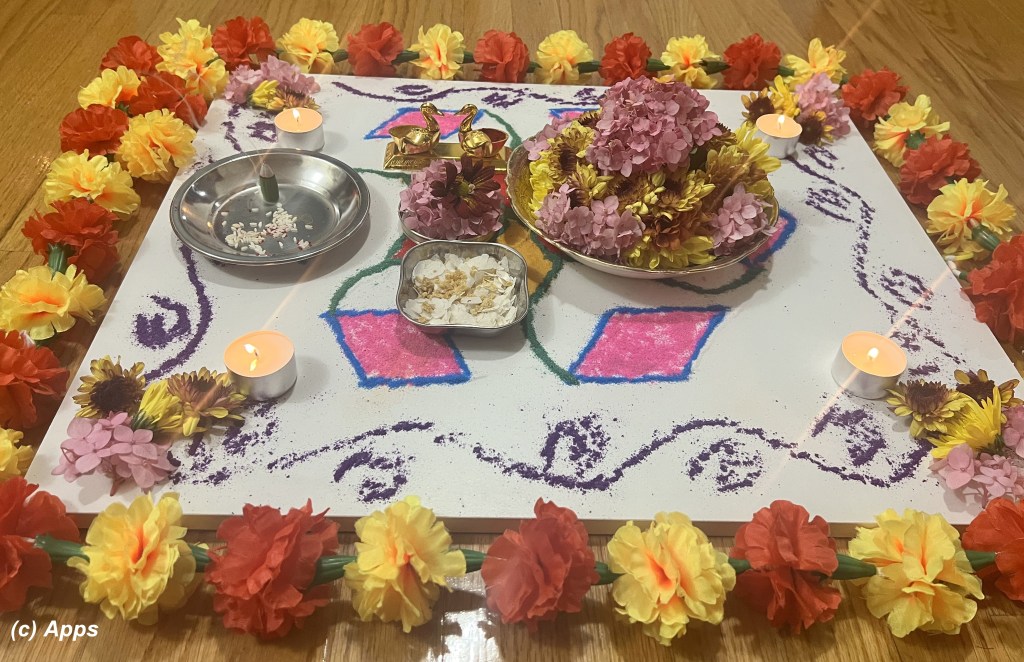
For Telugu speaking states, Bathukamma starts on the day before Navratri, a flower festival. It is a beautiful flower stack, arranged with seasonal flowers in seven concentric layers in the shape of temple gopuram (= ornate entrance of a temple). Typically this flower stack is created uniquely for nine-days and culminates two days before Dusshera ends. However, I do the first day and last day only. We dance around it in joy and harmony. This festival also celebrates the femineity and life.
Each day of Bathukamma has unique names as well – Day 1: Engili pula (= Old Flowers) Bathukamma; Day 2: Atukula (= Flattened Rice or Poha) Bathukamma; Day 3: Muddapappu (= Lentil Curry) Bathukamma; Day 4: Nanabiyyam (= New Rice) Bathukamma; Day 5: Atla (= Indian Dosa) Bathukamma; Day 6: Aligina (= Sulky) Bathukamma; Day 7: Vepakayala (= Neem Fruits) Bathukamma; Day 8: Vennela muddala (= Morsels of Moonlight) Bathukamma; and Day 9: Saddhula (= The Big One) Bathukamma. Whether you do 1 – day or 9 – days, at the end of each day the flower stack is immersed in water.
Here is my Bathukamma that we made, mom and me, a small one.
The two types of dances we did around the Bathukamma.
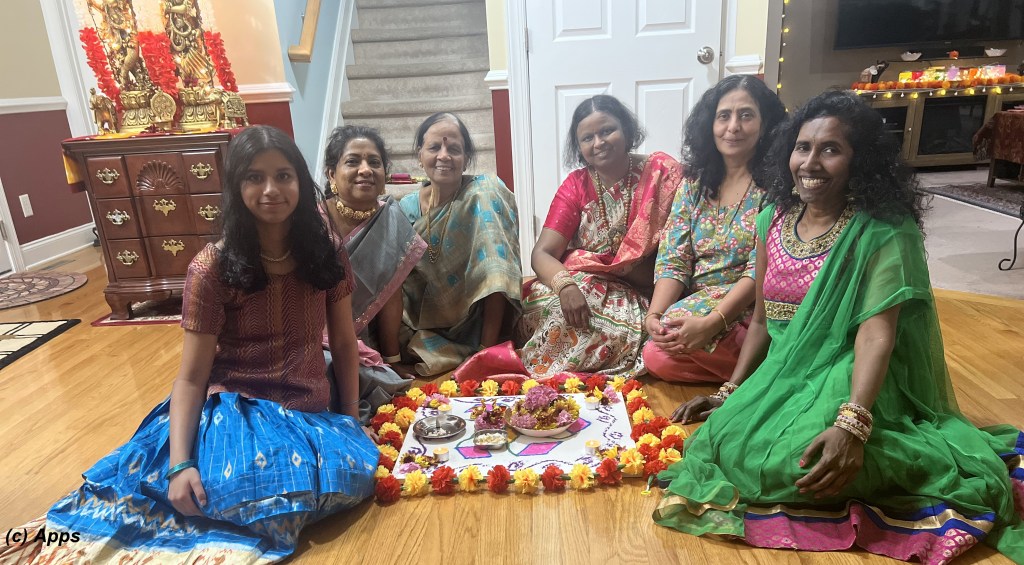
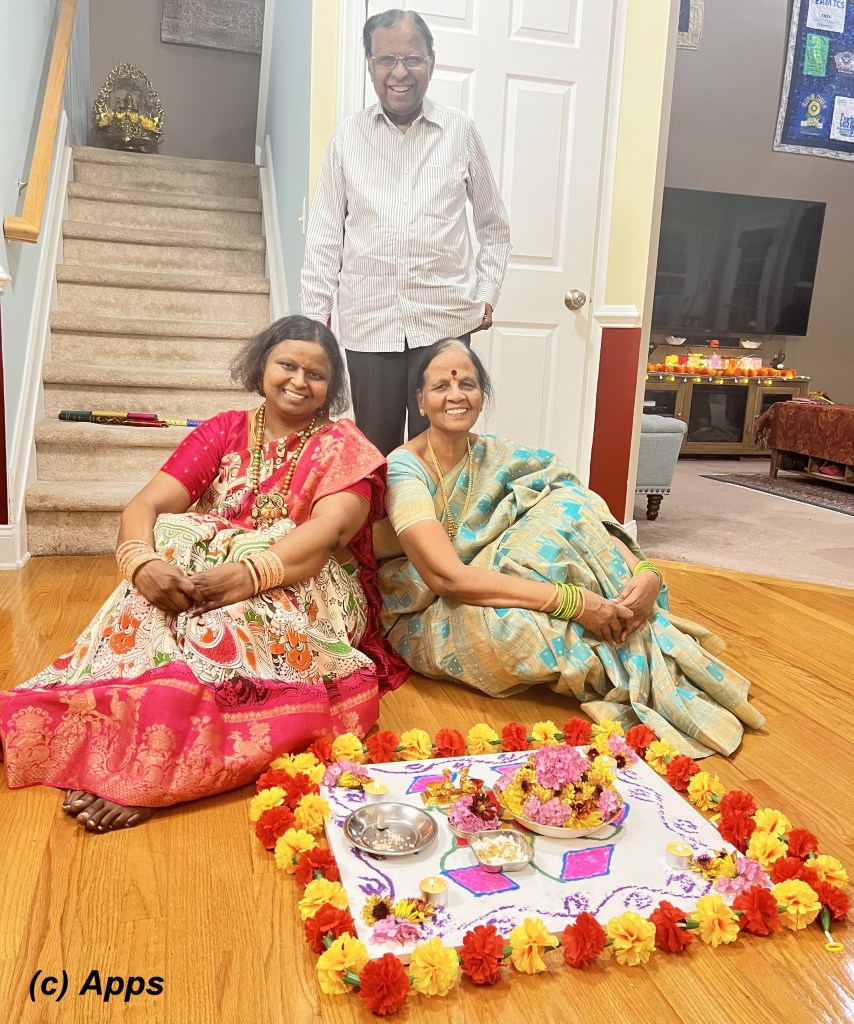
And a picture with my family and friends.
 Galavant Reflections
One thought on “Holidays & Observances: Bathukamma”